Archaeological discoveries that will shake the world in 2025
Dec 29, 2025
Washington [US], December 29: Thanks to a combination of modern tools and traditional excavation methods, 2025 will see impressive discoveries in archaeology.
From the excavation of royal tombs and the discovery of World War II warship wrecks to the successful decoding of the oldest known ancient Egyptian genome, archaeological finds in 2025 will once again demonstrate that much of human history still lies deep beneath the ocean, in dense forests and vast deserts, waiting to be discovered.
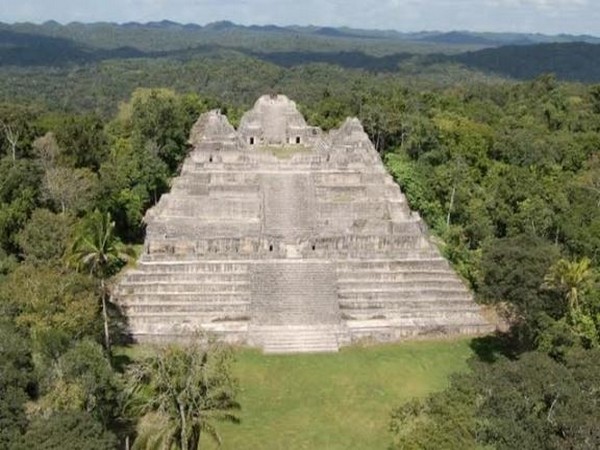
The tomb of the founder of the Maya dynasty.
For nearly 40 years, archaeologists Arlen and Diane Chase of the University of Houston (USA) have been excavating numerous structures of the ancient Mayan civilization at Caracol, now located deep in the Belize rainforest.
In 2025, they announced one of the biggest discoveries of their research career to date: a royal tomb dating back approximately 1,700 years, identified as occurring between 330 and 350 AD.
Researchers believe the tomb belonged to a famous king of the Mayan civilization named Te K'ab Chaak. If their hypothesis is correct and the remains inside truly belong to King Te K'ab Chaak, he would be the founder of a Mayan dynasty that ruled Caracol for nearly 500 years.
Clues about the location of Cleopatra's tomb.
From the rise of the Mayan dynasty to the fall of the Ptolemaic dynasty in Egypt, this year archaeologists have also unearthed a clue that could help locate the tomb of Queen Cleopatra.
For the past two decades, Kathleen Martínez, a National Geographic explorer, has been persistently searching for Cleopatra's final resting place inside a little-known temple called Taposiris Magna. This journey has taken her from the temple, located about 48 kilometers west of Alexandria, to the Mediterranean Sea. There, they discovered an ancient, sunken harbor dating back to the queen's time.
Divers led by National Geographic explorer Bob Ballard mapped the structures on the seabed. The new discovery reveals that Taposiris Magna was not only a religious center but also an important maritime hub.
The new discovery strengthens the hypothesis that Queen Cleopatra chose Taposiris Magna as the site for her tomb. However, whether the queen's remains lie somewhere offshore is a question that needs to be answered in further research.
Besides his research on Queen Cleopatra, explorer Bob Ballard also led a deep-sea expedition to Iron Bottom Sound in the Solomon Islands to survey shipwrecks from World War II. The seabed there is the burial ground for over 100 Allied and Japanese warships destroyed in the Battle of Guadalcanal, also in the Solomon Islands. Some of these wrecks had not been seen since the 1940s.
During this expedition, Ballard and his colleagues aboard the research vessel E/V Nautilus used remotely operated vehicles to survey 13 shipwrecks, including the Imperial Japanese Navy destroyer Teruzuki and the heavily damaged bow section of the American battleship USS New Orleans.
These expeditions not only shed light on the tactics and course of the war in the Pacific, but also exposed the enormous human cost: more than 27,000 people were killed in the six-month battle for control of Guadalcanal Island.
Lost tomb of Pharaoh Thutmose II found.
While the search for Queen Cleopatra's tomb continues, this year archaeologists have discovered the tomb of another Egyptian king. After more than a century of searching, the tomb of Pharaoh Thutmose II has finally been identified.
Pharaoh Thutmose II reigned from 1493 to 1479 BC, during the early period of the 18th Dynasty. His queen was Hatshepsut, who later declared herself pharaoh and became one of the most powerful female rulers in ancient Egyptian history.
This is the first royal tomb discovered near the Valley of the Kings since the time of Pharaoh Tutankhamun, west of Luxor. Inside the tomb, archaeologists found hieroglyphic walls and a ceiling decorated with intricate astronomical motifs.
Decoding the most complete and ancient Egyptian genome.
Inside a tomb carved into the side of a limestone hill at the Nuwyat necropolis in Egypt, archaeologists have found a ceramic vessel containing the bones of a man who lived approximately 4,500 years ago, during the Old Kingdom period of Egypt.
Genetic analysis revealed that approximately 80% of this man's DNA originated from Neolithic communities in North Africa, while the remaining 20% came from populations in West Asia.
The research team also used 3D facial scanning technology to reconstruct his appearance, but decided not to recreate his hair and skin color because they did not yet have enough information.
Source: Thanh Nien Newspaper