Understanding Risk Management in Stock Market Investing: A Practical Guide for Beginners
Jul 16, 2026
PNN
New Delhi [India], July 16: Investing in the stock market offers the potential to build long term wealth, but it also comes with risks that every investor should understand. Market fluctuations, economic events, company specific issues, and global uncertainties can all affect investment returns. While no strategy can eliminate risk entirely, effective risk management helps investors make informed decisions and stay focused on their financial goals.
Whether you invest independently or seek guidance from the best stock advisory or a trusted stock advisory company, understanding risk management is essential for making disciplined investment decisions and avoiding common mistakes.
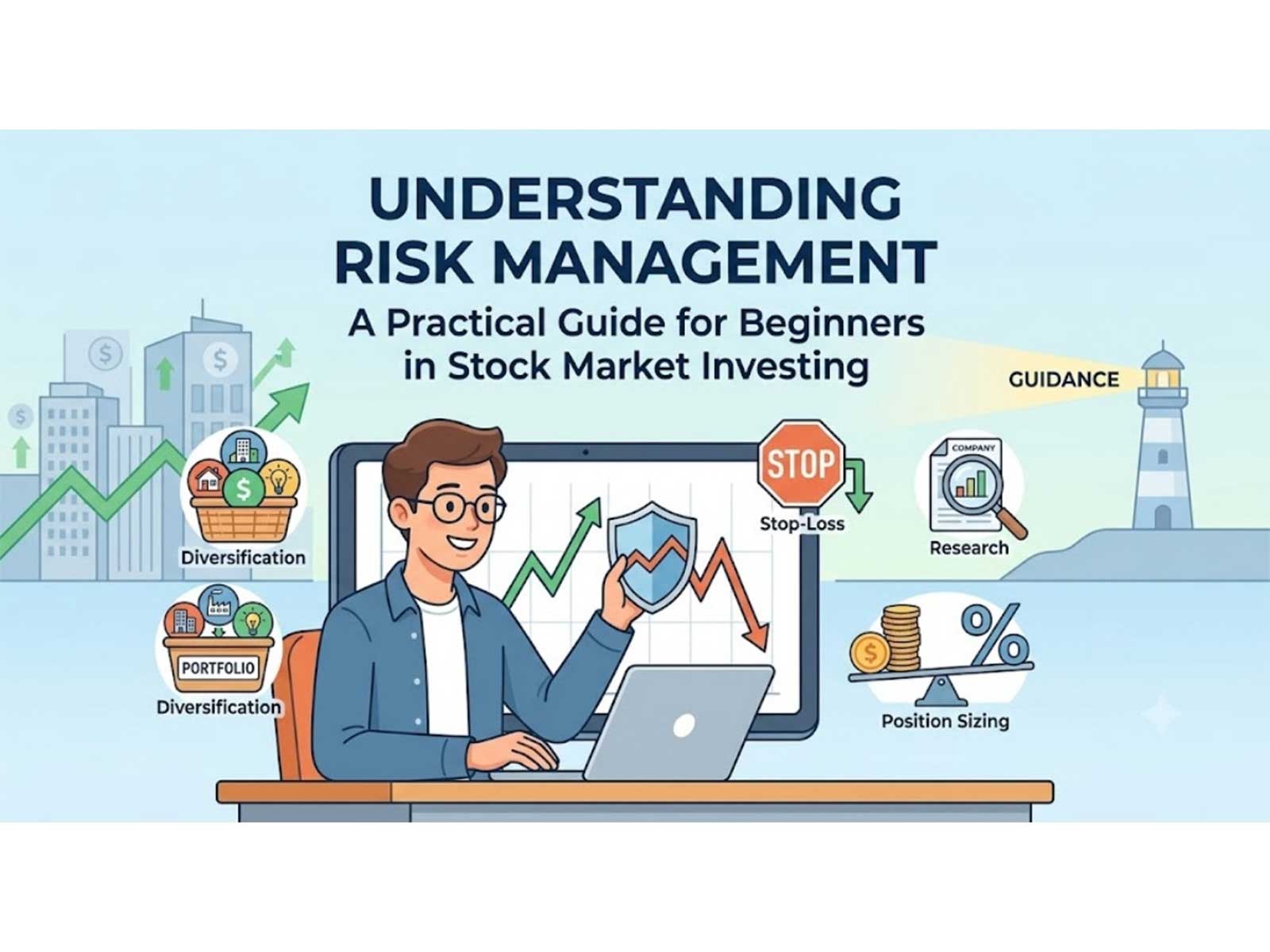
Risk management in stock market investing involves identifying, assessing, and reducing potential investment losses through strategies such as diversification, asset allocation, regular portfolio reviews, and disciplined investing. It helps investors manage market volatility, protect capital, and make better long term financial decisions without trying to eliminate risk completely.
Context and Background
The Indian stock market has witnessed a significant increase in retail participation over the past few years. Easy access to online trading platforms, mobile investment apps, and growing financial awareness have encouraged millions of first time investors to participate in equity markets.
At the same time, markets remain influenced by various factors, including interest rate changes, inflation, corporate earnings, government policies, geopolitical developments, and global economic conditions. These factors can create short term price movements that may appear unpredictable.
Many beginners focus primarily on selecting stocks with growth potential but overlook an equally important aspect of investing: managing risk.
Risk management does not mean avoiding the stock market. Instead, it means understanding possible outcomes and taking practical steps to reduce unnecessary exposure while remaining invested for the long term.
Investors often consult the best stock advisory services to understand portfolio risks and build investment strategies aligned with their financial objectives.
Key Developments and Insights
What Is Risk Management in Investing?
Risk management refers to the process of identifying potential investment risks and taking measures to minimize their impact.
Instead of trying to predict every market movement, investors focus on building portfolios that can perform reasonably well across different market conditions.
The goal is not to eliminate losses completely but to reduce avoidable risks while maintaining opportunities for long term growth.
Types of Risks in Stock Market Investing
Market Risk
Market risk affects nearly all stocks due to broader economic or financial events.
Examples include:
- Economic slowdowns
- Rising inflation
- Interest rate hikes
- Global financial uncertainty
Even fundamentally strong companies may experience temporary declines during broad market corrections.
Company Specific Risk
This risk relates to the performance of individual companies.
Factors include:
- Weak financial results
- Management changes
- Product failures
- Regulatory issues
- High debt levels
Diversification helps reduce this type of risk.
Sector Risk
Different industries perform differently during various economic cycles.
For example:
- Banking reacts to interest rate movements.
- IT depends on global technology spending.
- Pharmaceuticals may remain relatively stable during uncertain economic conditions.
Investing across multiple sectors helps manage sector specific risks.
Liquidity Risk
Some stocks may have lower trading volumes, making it difficult to buy or sell shares quickly without affecting prices.
This is more common in smaller companies.
Inflation Risk
If investment returns fail to outpace inflation over time, purchasing power gradually declines.
Long term investing often aims to generate returns above inflation.
Practical Risk Management Strategies
Diversify Your Portfolio
Diversification remains one of the most effective risk management techniques.
Instead of investing only in one company or sector, spread investments across:
- Banking
- Information Technology
- Healthcare
- FMCG
- Automobile
- Energy
- Infrastructure
This reduces dependence on the performance of a single investment.
Define Your Risk Appetite
Every investor has a different comfort level with market fluctuations.
Factors influencing risk tolerance include:
- Age
- Income stability
- Financial goals
- Investment horizon
- Existing savings
A portfolio should match an investor's ability to handle temporary declines.
Invest for the Long Term
Short term market volatility is a normal part of investing.
Historically, investors who stay invested over longer periods have generally experienced better opportunities to recover from market corrections compared to those who frequently enter and exit the market.
Avoid Emotional Decisions
Fear and greed often lead to poor investment choices.
Common mistakes include:
- Selling during market declines
- Buying after sharp rallies
- Following market rumours
- Chasing trending stocks without research
A disciplined investment approach helps reduce emotional decision making.
Review Your Portfolio Regularly
Markets constantly evolve.
A portfolio review every six to twelve months helps ensure investments remain aligned with financial goals and desired asset allocation.
Many investors work with a stock advisory company for periodic portfolio reviews and rebalancing.
Use Asset Allocation
Risk management extends beyond selecting stocks.
Investors often allocate money across different asset classes such as:
- Equity
- Debt instruments
- Gold
- Cash equivalents
A balanced asset allocation helps reduce overall portfolio volatility.
Impact and Implications
For Investors
Effective risk management can help investors:
- Reduce unnecessary investment losses
- Improve long term portfolio stability
- Build confidence during market fluctuations
- Stay focused on financial goals
Rather than reacting to every market movement, investors can make decisions based on their investment plan.
For Businesses
Healthy investor participation contributes to stronger capital markets.
Companies with sound governance and stable financial performance often attract long term investors who value sustainable growth over short term price movements.
For Consumers
Greater awareness of investment risks encourages better financial planning.
As more households participate in equity markets, understanding risk management becomes an important part of personal finance education.
Opportunities and Risks
Opportunities
Better Portfolio Stability
Diversified investments can reduce the impact of individual stock declines.
Improved Decision Making
Investors who understand risk often make more informed financial choices.
Long Term Wealth Creation
Managing risk allows investors to remain invested through different market cycles.
Disciplined Investing
Risk management promotes consistent investing instead of reacting to market emotions.
Risks
Risk Cannot Be Eliminated
Every investment carries some level of uncertainty.
Overconfidence
Assuming markets will always recover quickly can lead to excessive risk taking.
Lack of Diversification
Concentrated portfolios remain vulnerable to company specific events.
Ignoring Financial Goals
Taking risks that exceed one's financial capacity may create unnecessary stress during market downturns.
Future Outlook
As India's financial markets continue to grow, investors are expected to gain access to more sophisticated portfolio management tools, educational resources, and digital investment platforms.
Technology driven portfolio analytics, artificial intelligence based research, and personalised recommendations may improve investment decision making. However, sound risk management principles such as diversification, asset allocation, and disciplined investing are likely to remain relevant regardless of technological advancements.
Many investors may continue to seek guidance from the best stock advisory or a reliable stock advisory company to better understand market risks and align investments with their long term financial plans.
Conclusion
Risk management is one of the foundations of successful stock market investing. While investors cannot control market movements, they can control how they prepare for them. Diversification, disciplined investing, regular portfolio reviews, and proper asset allocation all contribute to managing investment risks more effectively.
Whether you are a beginner or an experienced investor, understanding risk management can help you make more informed decisions and remain focused on your long term financial objectives. Combining careful planning with continuous learning creates a stronger foundation for navigating changing market conditions.
For further reading on investing and market regulations, refer to:
- Securities and Exchange Board of India (SEBI)
- National Stock Exchange (NSE)
- Bombay Stock Exchange (BSE)
- Association of Mutual Funds in India (AMFI)
Frequently Asked Questions (FAQs)
1. What is risk management in stock market investing?
Risk management is the process of identifying and reducing potential investment losses through strategies such as diversification, asset allocation, and disciplined investing.
2. Why is risk management important for investors?
It helps investors manage market volatility, protect capital, and make informed decisions while working toward long term financial goals.
3. Can risk in the stock market be completely eliminated?
No. Every investment carries some level of risk. Risk management focuses on reducing unnecessary exposure rather than eliminating risk entirely.
4. What is the difference between risk management and diversification?
Diversification is one risk management strategy that spreads investments across multiple sectors and companies to reduce concentration risk.
5. How often should I review my investment portfolio?
Many financial professionals recommend reviewing a portfolio every six to twelve months or after major financial or life changes.
6. Does investing for the long term reduce risk?
Long term investing can help investors manage short term market volatility, although it does not guarantee positive returns.
7. How does asset allocation help manage investment risk?
Asset allocation spreads investments across different asset classes, helping reduce the impact of poor performance in any one category.
8. Should beginners seek advice from a stock advisory company?
Beginners may benefit from guidance provided by a registered stock advisory company, particularly when building diversified portfolios aligned with their financial goals.
9. What are the most common mistakes in risk management?
Common mistakes include overconcentration in one stock, emotional investing, ignoring diversification, and failing to review portfolios regularly.
10. How can investors choose the best stock advisory?
Investors should look for advisors registered with the Securities and Exchange Board of India (SEBI), evaluate their investment approach, understand the services offered, and ensure recommendations align with their financial goals rather than relying solely on past performance.
(ADVERTORIAL DISCLAIMER: The above press release has been provided by PNN. ANI will not be responsible in any way for the content of the same.)