Public Policy must be guided by the Constitution of India: Dr L. Murugan, Minister of State at 2nd Jindal Policy Conclave
Sep 19, 2026
VMPL
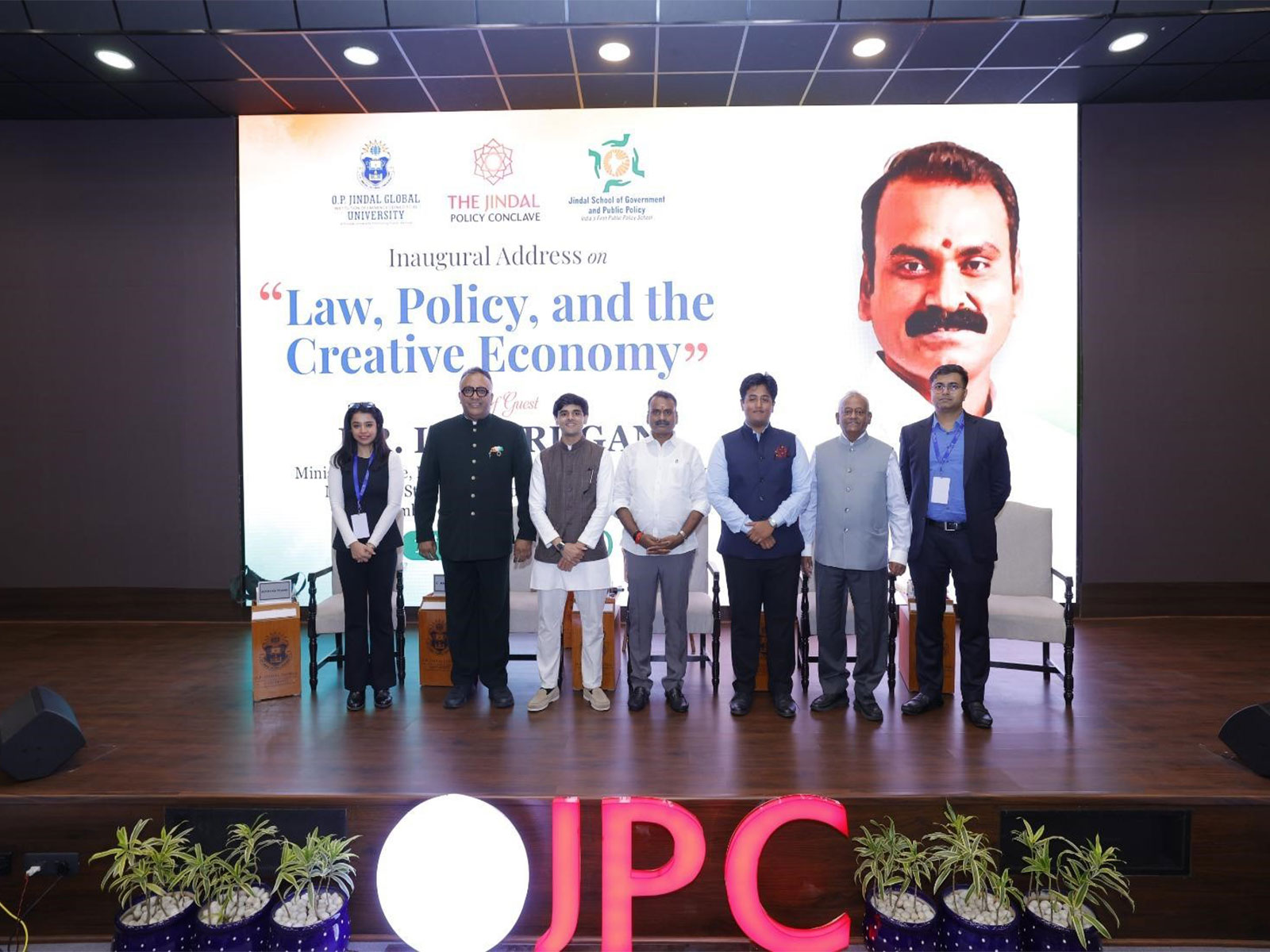
Sonipat (Haryana) [India], September 19: “Public Policy must be guided by the Constitution of India. It defines the relationship between the citizen and the state, protects fundamental rights, establishes institutional accountabilities and provides a vision for inclusive national development,” said Dr L. Murugan, Minister of State for Information and Broadcasting and Parliamentary Affairs, Government of India, at the Jindal Policy Conclave 2026 on the theme ‘A Young India at the Global Stage’.
The second edition of the Jindal Policy Conclave will bring together 30 distinguished voices at O.P. Jindal Global University to discuss the role of India’s youth in governance, democratic participation, economic development, institutional reform, and India’s global engagement.
“Congratulations to O.P. Jindal Global University for creating a platform that brings together law, public policy, governance and young minds who will shape the future of our country. You belong to the most exciting generation in Indian history as you will be the future leaders of the country. The Government of India has taken several initiatives that demonstrate how policy can translate national priorities into programmes of action,” the Minister further said.
In a wide-ranging speech on law, policy and the creative economy, the Minister added, “Future lawyers must understand not only statutes and judgments, but also technology, innovation, culture, and business models. Under the changing nature of work, future entrepreneurs must understand not only markets and finance but also storytelling, design, policy, artificial intelligence and the trust that builds lasting brands. Future journalists must understand not only facts and headlines, but also digital platforms, algorithms, ethics and misinformation.”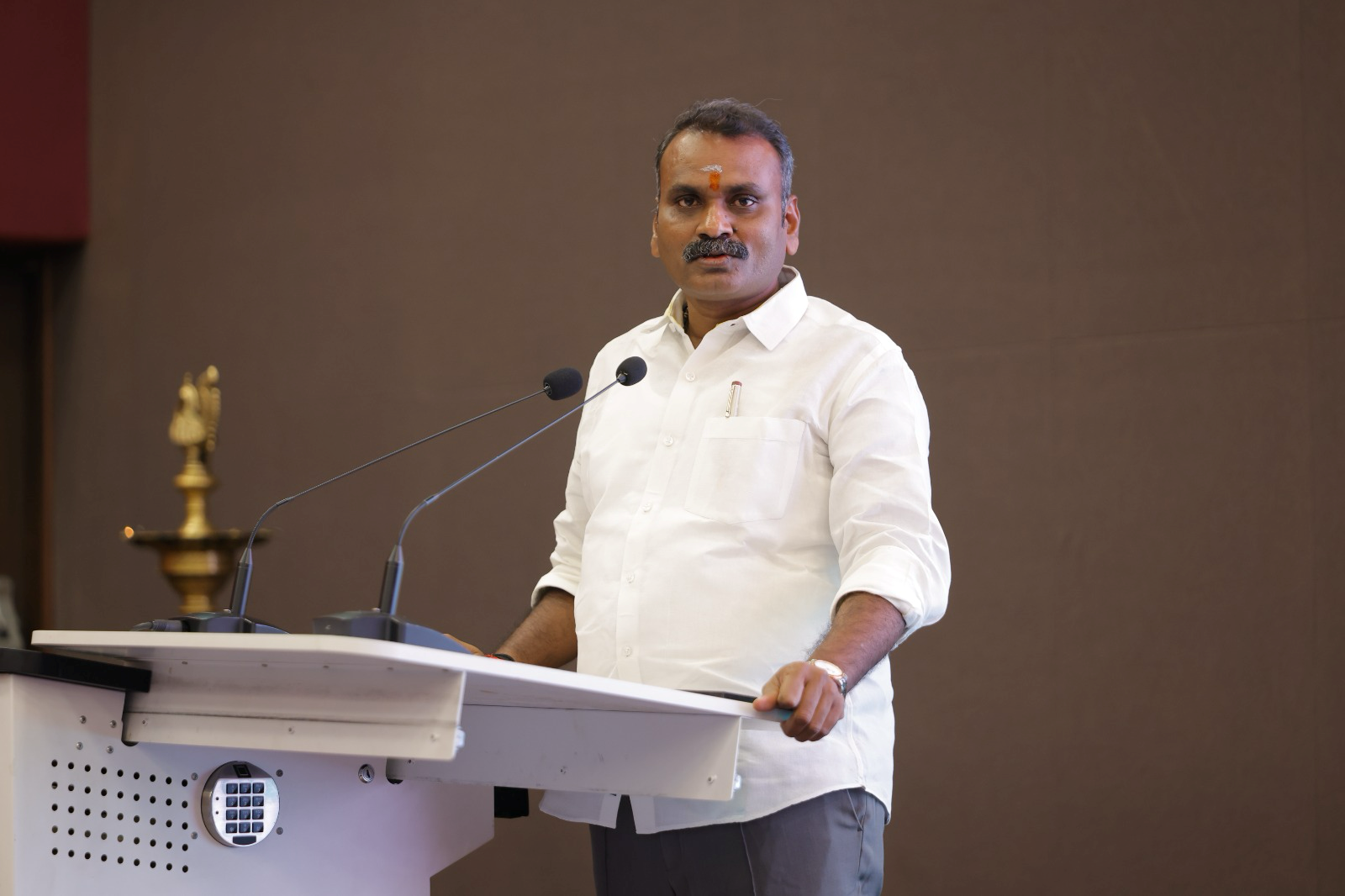
In his welcome address, Prof. (Dr.) C. Raj Kumar, the Founding Vice Chancellor of O.P. Jindal Global University, said, “I am deeply grateful to Dr L. Murugan, who is a distinguished parliamentarian, currently serving as both the Minister of State for Information and Broadcasting and the Minister of State for Parliamentary Affairs, Government of India, for his inaugural address at the Jindal Policy Conclave 2026. He has had a very long and outstanding career, holding various positions of power and responsibility both within the state of Tamil Nadu and at the national level. In the context of the Policy Conclave, we must remember that universities are institutions which are expected to speak truth to power and also be able to deeply engage in addressing the big challenges of our time. I want to pay tribute to the alumni of the Jindal School of Government and Public Policy and students from other schools who have come together to organise the Conclave.”
The Jindal Policy Conclave (JPC) 2026, a student-led public policy conference hosted by the Jindal School of Government and Public Policy (JSGP), O.P. Jindal Global University, is being held on 18–19 September 2026 at the university’s Sonipat campus. The second edition has brought together 30 policymakers, parliamentarians, academics, civil servants, journalists, and practitioners for two days of dialogue on issues shaping a young India.
Over two days, the Conclave will feature seven thematic panels addressing federalism and regionalism; the agrarian economy and agricultural reform; defence and military manufacturing; free speech and press freedom; artificial intelligence and misinformation; jobs and employment; youth democratic participation; and women’s safety, participation, and lived realities.
Prof. R. Sudarshan, Dean, Jindal School of Government and Public Policy, delivered the opening remarks and said, “Dr L. Murugan has emerged as a key architect of India’s creative economy. He also launched five major knowledge reports which demonstrate how data-backed research can guide industry strategy and help evidence-based policymaking.”
The keynote address was delivered by Prof. (Dr.) Lobsang Sangay, Lecturer of Law at Harvard Law School and Former President of the Central Tibetan Administration. He said that young people should contribute to society without any fear of disappointment or failure. “Young Indians already belong to a 5,000-year-old rich cultural heritage. They should pursue their goals without worrying about results as the hard work itself will lead to success.”
Other distinguished speakers will include Admiral (Retd.) Dinesh Kumar Tripathi, former 26th Chief of the Naval Staff; Smt. Iqra Choudhary, Member of Parliament from the Kairana Lok Sabha Constituency; Smt. Kanta Singh, Deputy Country Head, UN Women India and Smt. Priyanka Chaturvedi, former Member of Parliament and visiting faculty at JSGP. Shri T. L. Satyaprakash, a 2002-batch Haryana-cadre IAS officer, will deliver the Valedictory Address.
The build-up to JPC 2026 included several pre-Conclave engagements. An interactive session with Prof. (Dr.) Manoj Kumar Jha, Member of the Rajya Sabha representing Bihar and National Spokesperson of the Rashtriya Janata Dal, examined structural gaps in India’s education system and the case for viewing education as a democratic project. The discussion covered educational inequality, merit, institutional accountability, public investment, youth unemployment, and democratic participation, with Prof. Jha emphasising that students are not merely the future but active participants in the present.
In collaboration with the India Chapter of the Hertie School of Public Policy in Germany and the Jindal Institute for Haryana Studies, JPC also conducted a 90-minute policy roundtable on ‘Leveraging the Potential of Solar Power in Haryana’, using Sonipat as an anchor case. In addition, it hosted a pan-India policy case competition examining why expanded formal credit has not necessarily translated into growth for Indian micro and small enterprises.
Through its two-day programme, JPC 2026 seeks to sustain dialogue between established and emerging voices, placing representation, education, employment, democratic participation, and institutional accountability at the centre of the policy discourse.
(ADVERTORIAL DISCLAIMER: The above press release has been provided by VMPL. ANI will not be responsible in any way for the content of the same)