Sohna to Dausa: How the Delhi-Mumbai Expressway Is Reshaping the Real Estate Landscape Around Sariska
Oct 09, 2026
VMPL
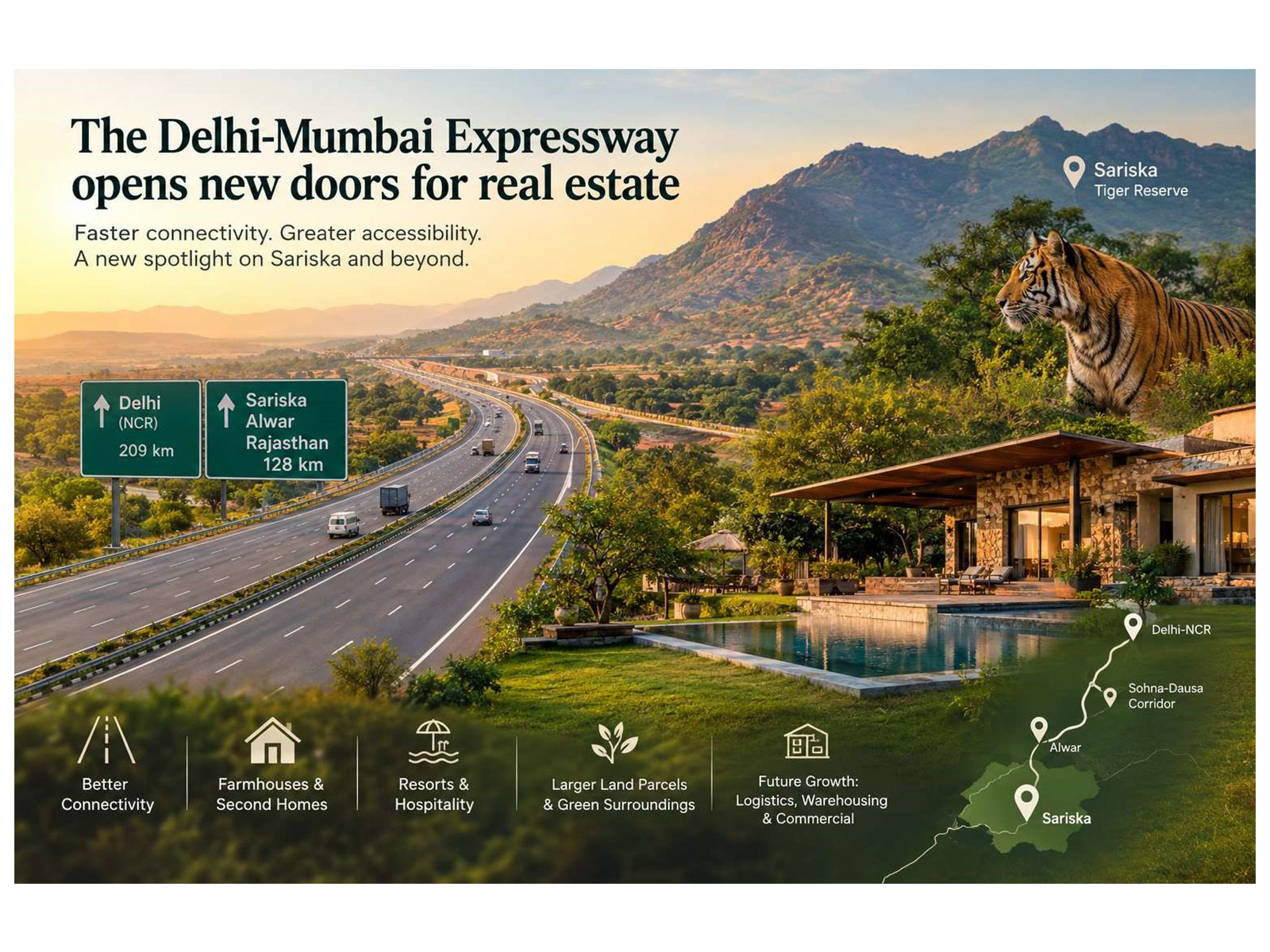
New Delhi [India], October 9: The Delhi-Mumbai Expressway is changing more than travel times between major cities. Along the Sohna-Dausa stretch, improved connectivity is beginning to influence the real estate landscape, bringing previously overlooked locations around Alwar and Sariska into greater focus for investors, developers and second-home buyers.
For years, the real estate story of the National Capital Region largely revolved around Gurugram, Noida, Greater Noida and emerging peripheral markets. The expressway has widened that geographical canvas by making parts of Rajasthan considerably more accessible from Delhi-NCR.
Sariska and its surrounding areas are among the locations benefiting from this shift.
Connectivity Brings New Locations into Focus
The biggest catalyst has been road connectivity. The Delhi-Mumbai Expressway provides faster access towards Rajasthan through the Sohna-Dausa corridor, making locations that were once considered relatively distant more practical for weekend travel and longer stays.
For buyers in Gurugram and other parts of NCR, this improved accessibility is gradually changing the perception of land beyond the conventional urban boundaries.
The appeal is particularly visible in land-led developments, farmhouses, managed communities, resorts and second homes. Unlike densely developed parts of NCR, the Sariska-Alwar belt still offers relatively larger land parcels and a predominantly nature-oriented environment.
This difference is encouraging developers and landowners to explore new formats rather than conventional high-density residential development.
Land Prices and the Appreciation Story
The source brief points to substantial appreciation along parts of the Sohna-Dausa corridor following the development of the expressway, with some pockets claimed to have witnessed increases of around 300% to 400%.
Such appreciation, however, can vary significantly according to location, land use, title, development permissions, road frontage and proximity to major infrastructure. Buyers therefore need to assess individual properties rather than treat corridor-level appreciation figures as uniform across the region.
What is more evident is that improved connectivity has narrowed the psychological distance between Delhi-NCR and parts of Rajasthan.
At the same time, land prices around Sariska and neighbouring locations can remain substantially different from established NCR markets, creating interest among buyers looking for larger plots, farmhouses or leisure-oriented properties.
Developers Explore Farmhouse and Resort Opportunities
Another emerging trend is developer interest in land parcels suitable for managed farmhouse communities and hospitality projects.
The source brief indicates that several developers, including established real estate companies, have explored opportunities in the wider region. Any specific land acquisition, project or investment by an individual developer, however, should be considered confirmed only after an official company announcement or regulatory disclosure.
The broader development pattern nevertheless reflects an important transition. Land in the region is increasingly being evaluated not only for agriculture or traditional plotting but also for organised farmhouse communities, resorts, hospitality developments and lifestyle projects.
Tourism and Real Estate Begin to Converge
Sariska has an advantage that many emerging peripheral real estate markets do not have: an established tourism identity.
Sariska Tiger Reserve, the Aravalli landscape and the wider heritage attractions of Alwar provide an existing reason for people to travel to the region. Better road connectivity can potentially convert some of those visitors into repeat travellers, second-home buyers and investors.
This creates an intersection between tourism and real estate.
A buyer considering a farmhouse near Sariska is not necessarily looking for the same proposition as someone buying an apartment in Gurugram. Space, greenery, accessibility and the ability to use the property as a weekend home can become equally important considerations.
Beyond Second Homes
The development story may also extend beyond leisure real estate.
Improved highway infrastructure can support warehousing, logistics, industrial activity and commercial development along strategically located stretches. As these activities expand, they can create employment and supporting demand for hospitality, housing and local services.
That makes the Sohna-Dausa corridor a broader infrastructure-led development story rather than solely a farmhouse market.
The next phase will depend on how quickly organised development follows connectivity. Clear land titles, infrastructure, planning regulations, environmental considerations and responsible construction will remain critical.
For now, however, the Delhi-Mumbai Expressway has fundamentally changed how investors and developers look at the geography between Delhi-NCR and Rajasthan. Sariska, once viewed primarily as a wildlife destination, is increasingly entering conversations around second homes, hospitality and land-led development.
The highway has shortened the journey. Its longer-term impact may be in expanding the boundaries of what Delhi-NCR buyers consider accessible real estate.
(ADVERTORIAL DISCLAIMER: The above press release has been provided by VMPL. ANI will not be responsible in any way for the content of the same)